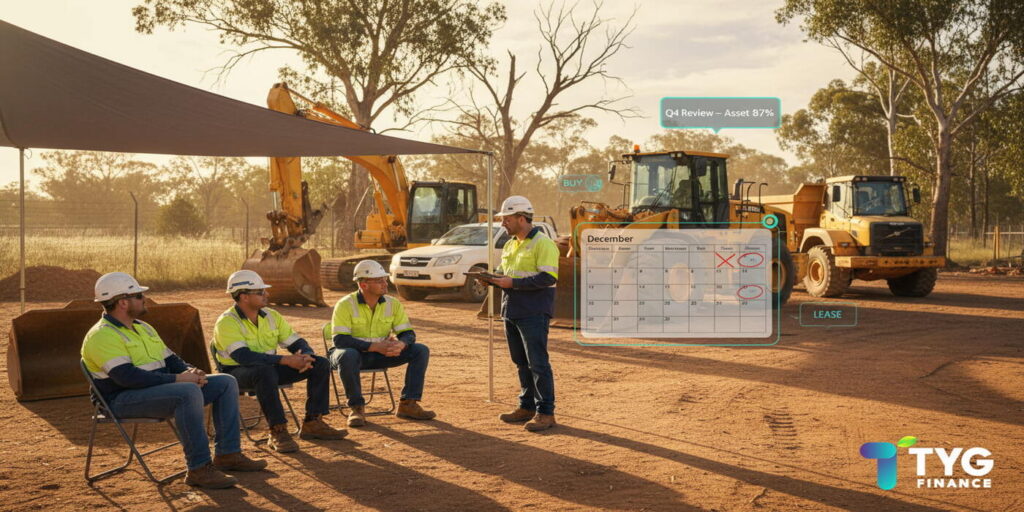
Why Year-End Machinery Planning Matters
For businesses in transport, mining, agriculture, and construction, the end of the year often becomes a natural point to review asset strategies. Machinery that has worked hard through seasonal peaks may be approaching the end of its reliable lifecycle, while operators weigh whether to buy, hire, or lease equipment for the year ahead.
These decisions are rarely simple. Beyond sticker price, considerations like utilisation thresholds, commissioning timelines, and financing strategies all play a role in shaping cost efficiency and compliance. This guide explores key factors operators may want to evaluate before committing to year-end machinery investments. For a deeper explore how lifecycle costs and duty cycles shape replacement timing, see our key insights on smart fleet replacement planning.
Buy vs Hire vs Lease: Comparing the Options
When operators consider new machinery, the first question often revolves around ownership versus access. Each option comes with advantages and trade-offs.
Buying Machinery
- Pros: Builds asset value, offers long-term control, potential resale value.
- Cons: High upfront cost, risk of obsolescence, requires capital outlay.
Hiring Machinery
- Pros: Flexible for short-term or seasonal projects, minimal maintenance obligations, lower initial outlay.
- Cons: Higher per-hour or per-day costs, limited availability in peak times, no equity built.
Leasing Machinery
- Pros: Predictable repayments, access to newer technology, less upfront capital required.
- Cons: Total cost may exceed purchase price over time, restrictions on usage, no ownership at lease end.
Explore financing tailored to each path with our Equipment Finance options.
Utilisation Thresholds: Knowing When Ownership Pays Off
A key question is: how often will the machinery be used?
- High utilisation (daily/weekly): Ownership or leasing may provide better value, as costs are spread across regular use.
- Medium utilisation (seasonal but predictable): Leasing may balance flexibility and access.
- Low utilisation (occasional projects): Hiring may minimise idle capital tied up in underused assets.
By modelling utilisation against costs, operators can better determine which option aligns with cash flow and productivity goals.
Commissioning and Timing: Planning Ahead for Operational Readiness
Year-end is often a time of urgency, but machinery investments require forward planning. New purchases may involve lead times for delivery, installation, or commissioning.
Factors operators often consider include:
- Delivery schedules: Popular models may face longer wait times.
- Installation and training: New machinery may require setup and workforce familiarisation.
- Regulatory checks: Compliance with Safe Work Australia guidelines and industry body requirements.
- Downtime planning: Scheduling commissioning during lower demand periods to avoid disruptions.
By aligning investment decisions with commissioning timelines, businesses may avoid delays that affect the next operational cycle.
For larger-scale upgrades, Machinery Finance can help structure repayments while assets are brought online.
Compliance Considerations: Safety and Industry Standards
Machinery investments don’t just influence productivity – they also impact safety and compliance. Operators weighing options often review:
- Work health and safety (WHS) obligations, including operator protection systems.
- Noise and emissions standards, which may affect both compliance and community acceptance.
- Maintenance protocols, as outlined by Safe Work Australia and machinery industry bodies.
Compliance-oriented decisions may add upfront costs but can reduce the risk of fines, incidents, and reputational damage. For a broader view on how safety, compliance, and total cost of ownership intersect across fleets and machinery, explore our guide to balancing fleet costs and safety.
Financing as a Strategic Tool
Rather than treating financing as an afterthought, many operators now view it as part of their broader asset strategy. Year-end investment decisions can benefit from financing structures that:
- Align repayments with seasonal revenue patterns.
- Support staged acquisitions, spreading costs over multiple years.
- Allow pre-approval, enabling businesses to act quickly when machinery becomes available.
These options can help businesses avoid straining capital reserves while still upgrading or expanding their machinery base. Our case study on growing freight capacity with finance shows how staged facilities and utilisation analysis can turn these financing principles into real-world upgrade decisions.
Example: A Construction Operator’s Machinery Choice
A mid-sized construction operator faced a decision at year-end: continue hiring excavators for seasonal projects or commit to a financed purchase.
- Hiring costs had added up to nearly the same as annual repayments on a financed machine.
- Utilisation analysis showed the excavators were needed more often than originally anticipated.
- With Machinery Finance tailored to their cash flow, the business opted to purchase.
While every situation differs, this example highlights how utilisation thresholds and financing can work together to inform smarter year-end decisions. Agricultural operators facing similar timing and utilisation questions can see how season-aware facilities work in practice in our guide to financing farm machinery for harvest.
Practical Takeaways for Operators
- Map utilisation rates to decide between buy, hire, or lease options.
- Plan commissioning timelines early to avoid delays in operational readiness.
- Embed compliance checks into procurement to reduce risk.
- Use financing strategically to balance investment with cash flow.
- Review industry body guidelines to align with evolving safety and efficiency benchmarks.
Smarter Machinery Decisions Start with Planning
Year-end machinery investments can set the tone for the year ahead. By weighing buy, hire, and lease options carefully, considering utilisation thresholds, and planning commissioning well in advance, businesses can position themselves for both productivity and compliance.
Financing plays a critical role in making these choices sustainable – enabling operators to secure the right machinery without straining capital reserves.
Get Pre-Approved Today with TYG Finance and explore your best options for year-end machinery investment.