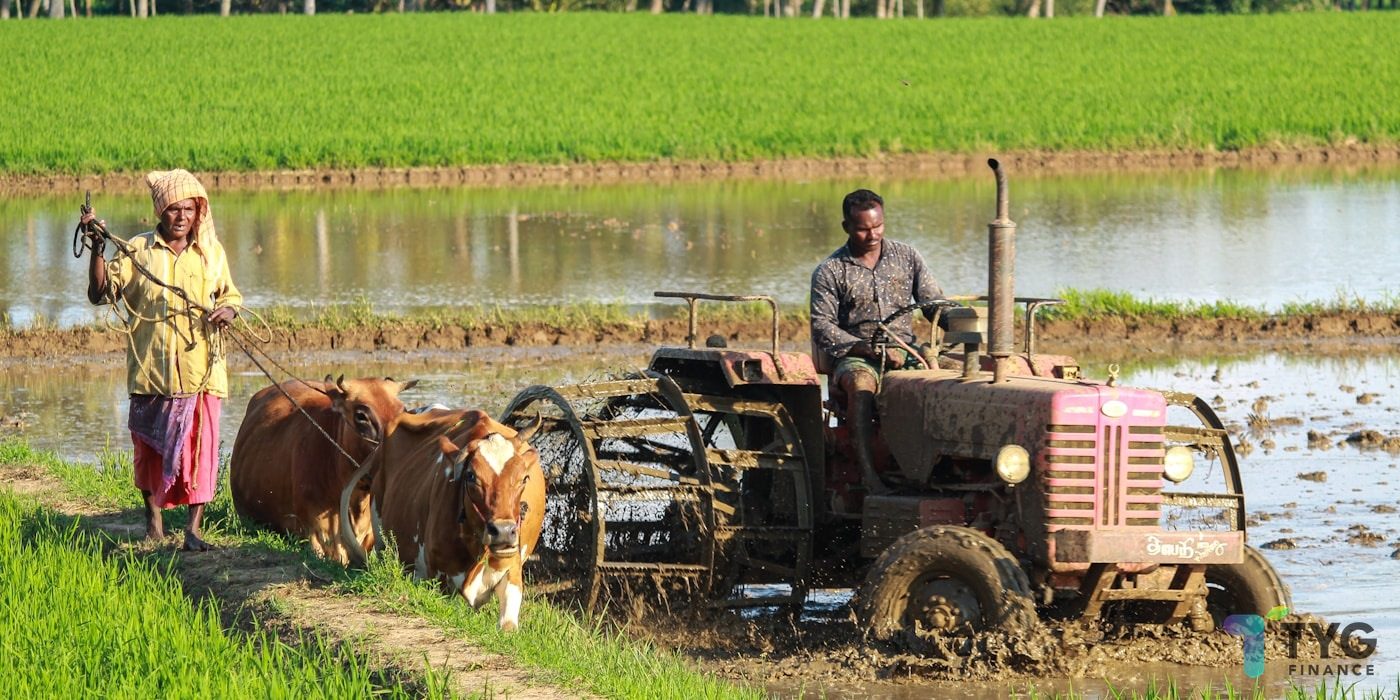
The months before spring planting force some of the biggest equipment calls grain farmers make all year. Financing tractors, seeders, harvesters and precision agriculture technology needs to line up with seasonal cash flow, harvest revenue timing and multi-year planning, not just whatever’s on offer when a machine breaks down mid-season. Here’s a practical way to work through it.
At a glance
Spring equipment finance for grain growers works best when repayments are timed to match when harvest revenue actually lands, not a flat monthly schedule – a seasonal structure on a $300,000 tractor can add as little as $3,000-$5,000 to total interest over the loan term while freeing up thousands in working capital through establishment. This guide covers seasonal repayment structures, getting equipment ready ahead of the planting window, owning versus contracting seeding and harvesting, precision agriculture payback, and choosing between chattel mortgage, lease and hire purchase.
Working with, not against, agricultural cash flow seasonality
Grain farming income is highly seasonal: most of it lands in a 3-4 month harvest and marketing window, typically November-February, while costs run year-round. July-September brings the major input costs, seed, fertiliser, fuel, against minimal revenue, meaning finance approvals matter most and working capital is stretched. October-November keeps the expenses coming with still no revenue and the added anxiety of weather risk, the point of maximum financial pressure. December-February is when revenue actually lands and repayment capacity is strongest. March-June, post-harvest, is when grain marketing wraps up, expenses ease, and there’s genuine opportunity for larger payments or capital improvements.
Finance needs to be structured around that pattern rather than a standard monthly schedule built for businesses with steady revenue, which can create real stress during the pre-harvest months. A number of agricultural finance specialists now offer seasonal payment variations, reduced obligations through establishment, higher payments through harvest, precisely to address this. Take a Victorian grain grower buying a $380,000 seeder in July: planting alone needs $180,000-$240,000 in seed, fertiliser and chemicals, and harvest revenue won’t land for another 5-6 months. A standard $6,500 monthly payment starting immediately puts pressure on working capital exactly when flexibility matters most. A harvest-aligned structure instead might defer payments until December, then step up to $10,000-$12,000 monthly through the revenue period, at a marginally higher total finance cost that’s usually well justified by the reduced operational stress and working capital preservation.
Getting equipment ready before the planting window, not during it
Spring planting windows are narrow and weather-dependent, and an equipment failure during that critical stretch costs far more than the machine itself, delayed planting can cut yield potential by 1-3% a week in many grain regions. A workable timeline starts 6-8 weeks before spring (May-June): comprehensive equipment inspections, identifying required repairs, services or replacements, checking precision agriculture technology is functioning properly, and starting finance applications for anything needed. By 4-6 weeks out (July-August), equipment purchases and delivery should be complete, precision agriculture systems installed and calibrated, operators trained on new equipment, and final pre-season preparation done. In the last 2-4 weeks (September), it’s down to final checks and adjustments, confirming parts inventory for common repairs, and reviewing planting plans against actual equipment capacity.
Timing genuinely matters here: farmers ordering equipment in July for September delivery can face 8-10 week waits for popular tractor or seeder models, while finance pre-approval lets a farmer move quickly when the right equipment becomes available. Those who delay until August often end up facing shortages or settling for sub-optimal specifications. Losing a seeder mid-planting is a well-known risk in grain regions, three weeks of a missed planting window can cut yields by roughly 8-12% across a 400-hectare block, commonly representing $45,000-$65,000 in lost revenue, well beyond whatever might have been saved by delaying a replacement decision.
$45,000-$65,000
The typical lost revenue when a missed planting window (as little as three weeks) cuts yields 8-12% across a 400-hectare block.
Structuring finance to match harvest revenue
Agricultural equipment finance increasingly recognises seasonal revenue patterns through purpose-built structures. On a $300,000 tractor over a 5-year term, a standard structure runs $6,100 a month year-round; a seasonal alternative might instead run $2,500 a month through establishment (July-November), step up to $11,500 through harvest and marketing (December-March), and settle to a moderate $4,800 through the post-harvest period (April-June). The seasonal structure accommodates cash flow reality while delivering an equivalent return to the lender, typically adding only $3,000-$5,000 to total interest cost across the loan term, a cost usually well justified by the working capital preserved during establishment.
Some specialist agricultural lenders go a step further with harvest-triggered structures, deferring all payments through July-November, then requiring a substantial lump sum post-harvest (December-January), before resuming regular monthly payments February-June. This suits operations with genuine confidence in harvest revenue and disciplined grain marketing, though it does concentrate financial obligations into a period already competing with harvest contractors, grain freight and fertiliser pre-purchase for the next season.
On the broader term question, multi-year finance (3-7 years) offers rate certainty across the commitment period, builds equity progressively, avoids annual approval uncertainty, and may carry tax depreciation benefits worth confirming with an accountant, though it commits the operation through variable season outcomes and reduces flexibility to adjust equipment configuration. Annual leasing offers equipment upgrade flexibility, lets equipment be returned if conditions change, and can better match certain tax structures (again, accountant advice essential), but comes with annual approval requirements, year-to-year rate uncertainty, and never builds ownership equity. Most grain operations favour multi-year finance for core equipment (tractors, harvesters, primary seeders) while considering leasing for supplementary or experimental gear like precision agriculture trial technology, specialised seeding bars or additional harvest capacity.
Owning equipment versus contracting the work out
Grain farmers need a genuinely systematic view of ownership versus contracting for major operations like seeding and harvesting. On harvesting, owning a $450,000-$650,000 harvester carries $65,000-$90,000 in annual fixed costs (finance, insurance, shed) plus $45-$65/ha in variable costs (fuel, labour, maintenance), against a breakeven around 800-1,200 hectares annually, complete scheduling control, and direct quality oversight. Contract harvesting at $180-$280/ha carries no fixed costs and no variable costs beyond the contract rate, but leaves timing dependent on contractor availability and quality control resting on the contractor’s own standards. For operations farming 1,500+ hectares, harvester ownership often makes economic sense, particularly where the operator can contract out an additional 400-600 hectares to neighbours; operations farming 600-900 hectares typically find contractor harvest more cost-effective, accepting the scheduling compromise that comes with it.
Seeding is a more complex call, since it needs precise timing within a narrow window and every farmer in a region wants seeding done simultaneously the moment conditions align, making contractor availability genuinely uncertain at exactly the wrong time. Many operations farming 500-800 hectares justify seeder ownership ($200,000-$380,000) primarily for timing control, even where the pure economics are marginal, because planting exactly when conditions optimise germination can deliver yield benefits that exceed the equipment cost on their own. It’s also worth knowing that finance needs differ by role: contractors generally need less tractor power but more transport capability, while fully-integrated operations need high-horsepower tractors capable of pulling large seeders or running GPS-guided equipment efficiently, a specification gap that can shift equipment costs by $80,000-$150,000 between otherwise similar operations and calls for different finance amounts and structures.
Precision agriculture technology: cost and payback
Modern grain farming increasingly runs on precision agriculture technology, GPS guidance, variable rate application, yield mapping and data platforms, representing a substantial investment layered on top of the base machinery. A GPS auto-steer (RTK) system runs $25,000-$45,000 with a 7-10 year lifespan and is usually best included with tractor finance; yield monitoring on a harvester runs $18,000-$32,000 over 5-8 years and suits harvester finance; a variable rate controller runs $12,000-$22,000 over 6-8 years and suits seeder finance; weather stations and soil sensors run $8,000-$15,000 over 5-7 years and usually need separate equipment finance or operating capital; farm management software runs $3,000-$8,000 annually as an ongoing subscription; and data connectivity runs $2,500-$5,000 annually, also ongoing. All up, comprehensive precision agriculture capability typically costs $65,000-$115,000 upfront plus $5,500-$13,000 a year in ongoing operating costs.
The payback tends to be genuinely strong. Variable rate fertiliser application typically cuts fertiliser costs 8-15% through zone-specific application ($12-$25/ha saved), GPS-guided operations reduce overlaps and gaps in seeding and spraying by 3-8% ($8-$15/ha saved), yield mapping supports data-driven decisions that improve productivity 2-5% over 3-5 years, and controlled traffic farming reduces soil compaction in a way that can lift yields 3-7% on suitable soil types. On a 1,000-hectare grain operation, these benefits can total $25,000-$45,000 annually, meaning an $85,000 technology investment can pay for itself within 2-3 seasons while continuing to deliver efficiency gains after that.
$25,000-$45,000
Annual efficiency gains a 1,000-hectare grain operation can expect from a full precision agriculture package.
There are a few ways to finance it. Bundling with equipment finance, GPS auto-steer with tractor finance, yield monitors with harvester finance, spreads technology cost across the equipment’s ownership period and is the simplest approach for new purchases. Financing technology separately suits retrofitting existing equipment, where a dedicated facility makes more sense than bundling. And some agricultural lenders now offer purpose-built technology package finance covering the whole precision agriculture ecosystem, GPS, sensors, software, connectivity, as one facility. Worth discussing with an accountant either way, since depreciation treatment varies depending on whether the technology is considered integral to the equipment or a separate business asset.
Chattel mortgage, lease, or hire purchase
Agricultural equipment finance generally runs through one of three structures, each with different tax and ownership implications. Chattel mortgage is the most common: the borrower owns the equipment from purchase and uses it as loan security, with the finance provider holding a mortgage until it’s repaid. Ownership is immediate, payments are principal plus interest with a possible balloon at term end, depreciation deductions are potentially available (accountant advice essential), and GST can typically be claimed on purchase subject to registration and advice. Typical terms run 3-7 years for tractors and harvesters, 3-5 years for implements and technology.
A finance lease keeps ownership with the lender through the lease term, with the farmer holding usage rights in exchange for lease payments and typically a purchase option at the end. Payments are fixed monthly amounts, the residual or purchase option typically sits at 10-30% of original cost, and tax treatment varies enough that accountant advice is critical. Terms typically run 3-5 years, with exercising the purchase option common. Hire purchase is similar to a chattel mortgage but ownership transfers only on the final payment: the finance company owns the equipment until then, monthly payments reduce principal, ownership transfers automatically at the end, and GST treatment differs from a chattel mortgage (again, get advice). Terms typically run 3-5 years for most agricultural equipment.
Most grain farmers favour chattel mortgages for core equipment, valuing immediate ownership, clear depreciation treatment, the flexibility to sell or trade if circumstances change, and straightforward accounting. Leasing suits more specific situations, trialling new technology or methods before committing to ownership, a preference for upgrading equipment frequently, or a tax structure where lease treatment genuinely works better (again, something for the accountant to confirm). It’s worth discussing the specific situation with an accountant familiar with agricultural tax structures before settling on a finance type, since the right answer depends heavily on business structure, income levels and operational circumstances.
Questions and Answers
How far in advance should grain farmers arrange equipment finance before spring planting?
Ideally begin equipment assessment and finance discussions 10-14 weeks before anticipated planting (late May to early June for September/October spring in most grain regions). This provides adequate time for comprehensive equipment evaluation, finance pre-approval, equipment ordering and delivery, and pre-season preparation. Farmers leaving decisions until August frequently face equipment supply constraints and rushed finance arrangements. Early planning enables better equipment choices and more favorable finance terms through reduced time pressure. Emergency mid-season equipment replacement invariably costs more, both in equipment prices and finance terms, than planned pre-season acquisition.
Should grain farming operations finance precision agriculture technology separately from equipment?
This depends on specific circumstances and timing. When purchasing new equipment, bundling precision agriculture technology with equipment finance is typically simplest: GPS auto-steer with tractor finance, yield monitoring with harvester finance. This spreads technology costs across equipment ownership period. However, when retrofitting existing equipment with precision agriculture, dedicated technology finance facilities might be appropriate. Some specialized agricultural lenders offer precision agriculture packages covering GPS, sensors, software, and connectivity as integrated finance facilities. Discuss tax implications with your accountant, as technology depreciation and deduction treatment varies depending on whether it’s considered equipment modification or separate business asset. The optimal approach depends on your equipment age, technology requirements, and tax structure.
How should grain farmers structure finance to handle drought or poor season outcomes?
Several risk management approaches help agricultural equipment finance survive difficult seasons. First, maintain adequate working capital reserves, ideally covering 12-18 months equipment finance commitments from cash or readily-accessible facilities. Second, discuss seasonal payment structures allowing reduced commitments during establishment with harvest-weighted payments. Third, consider income-contingent provisions where some lenders allow temporary payment variations during documented poor seasons (requiring evidence like Farm Management Deposit drawdowns or drought declarations). Fourth, avoid over-committing equipment finance, financing 70-80% of prudent equipment capacity rather than 100% provides buffer during difficult periods. Fifth, maintain grain marketing discipline to ensure harvest revenue isn’t eroded through poor selling decisions. Finally, communicate early with finance providers if difficulties emerge, as most agricultural lenders prefer working constructively with farmers experiencing genuine seasonal challenges rather than dealing with defaults after relationships deteriorate.
Helpful Australian Resources
Grain Growers Australia
Industry organization providing market insights, policy advocacy, and farming best practices.
Website: www.graingrowersaustralia.com.au
National Farmers’ Federation
Peak body representing Australian farmers including grain producers.
Website: www.nff.org.au
Rural Financial Counselling Service
Free, independent financial counseling for farmers facing financial challenges.
Website: www.agriculture.gov.au/ag-farm-food/drought/assistance/rural-financial-counselling-service
Australian Taxation Office (ATO)
Information about agricultural tax treatment, depreciation, and farm business structures.
Website: www.ato.gov.au
Planning equipment finance for seasonal operations
Agricultural machinery finance before spring calls for systematic planning that recognises seasonal cash flow patterns, equipment timing requirements and multi-year operational objectives, rather than reactive decisions made under planting-window pressure.
The operations that get this right start equipment assessment 10-14 weeks before critical operational periods, structure finance payments around when revenue actually lands, weigh ownership against contracting systematically rather than by habit, treat precision agriculture technology as an integrated investment rather than an afterthought, choose finance structures that suit their tax position and ownership objectives, and keep working capital buffers in place for seasonal variability.
Equipment finance isn’t simply securing funds for a purchase, it’s strategic capital allocation that supports operational requirements while preserving financial flexibility through genuinely variable seasons.
TYG Finance works with Australian grain farming operations exploring agricultural equipment finance solutions that might align with seasonal cash flow patterns and operational requirements. We understand that tractor finance, harvester finance, and precision agriculture technology involves balancing timing, capacity, and cash flow management unique to agricultural operations.
Ready to discuss agricultural equipment finance options? Contact TYG Finance to explore finance structures that could work for your farming operation’s equipment requirements.
Contact TYG Finance today to discuss agricultural machinery financing before spring season.
Important Disclaimer
This guide is provided for general informational purposes only and should not be considered financial, taxation, or professional advice. Agricultural equipment costs, finance terms, and seasonal patterns vary significantly based on location, commodities, farm size, and market conditions.
Seasonal outcomes are inherently uncertain. Equipment investment decisions should be based on comprehensive business planning considering multiple-year scenarios including potential adverse seasons.
Tax treatment of equipment finance varies substantially based on business structure, income levels, and specific circumstances. The general information provided about chattel mortgages, leases, and hire purchase should not substitute for specific taxation advice from qualified agricultural accountants familiar with your circumstances.
Equipment finance applications are subject to individual assessment. Interest rates, fees, terms, and conditions vary based on circumstances, lender criteria, security position, and market conditions.
Before making equipment purchase or finance decisions, you should:
- Consult with qualified agricultural accountants regarding tax implications and business structure considerations
- Seek independent financial advice about your specific circumstances
- Carefully review all loan documentation and terms before committing
- Consider your operational requirements, cash flow patterns, and risk tolerance
- Assess equipment ownership versus contractor alternatives systematically
- Evaluate total cost of ownership including operating costs and residual value
TYG Finance is a commercial finance broker. We may receive commissions from lenders for successful finance arrangements. This guide does not constitute a recommendation to enter into any specific financial product or equipment purchase.
All applications subject to lender approval. Information current as of publication date and may change based on seasonal conditions and market developments.
About TYG Finance
TYG Finance is an Australian commercial finance broker specializing in equipment finance solutions for agricultural operations, including grain farming, livestock production, and mixed farming enterprises. We work with a panel of lenders to help farmers explore finance options that may suit their seasonal cash flow patterns and operational requirements.
Disclaimer: This article is provided for general information only. TYG Finance recommends seeking independent financial and taxation advice before making finance decisions.
Related Articles
- Spring Equipment Finance: A Farm’s Approach – Read a farm finance case study
- Seasonal Ag Equipment Finance: Key Factors to Consider – Explore seasonal finance factors
- Earthmoving Equipment ROI and Job Matching Guide – Review equipment ROI principles applicable to ag