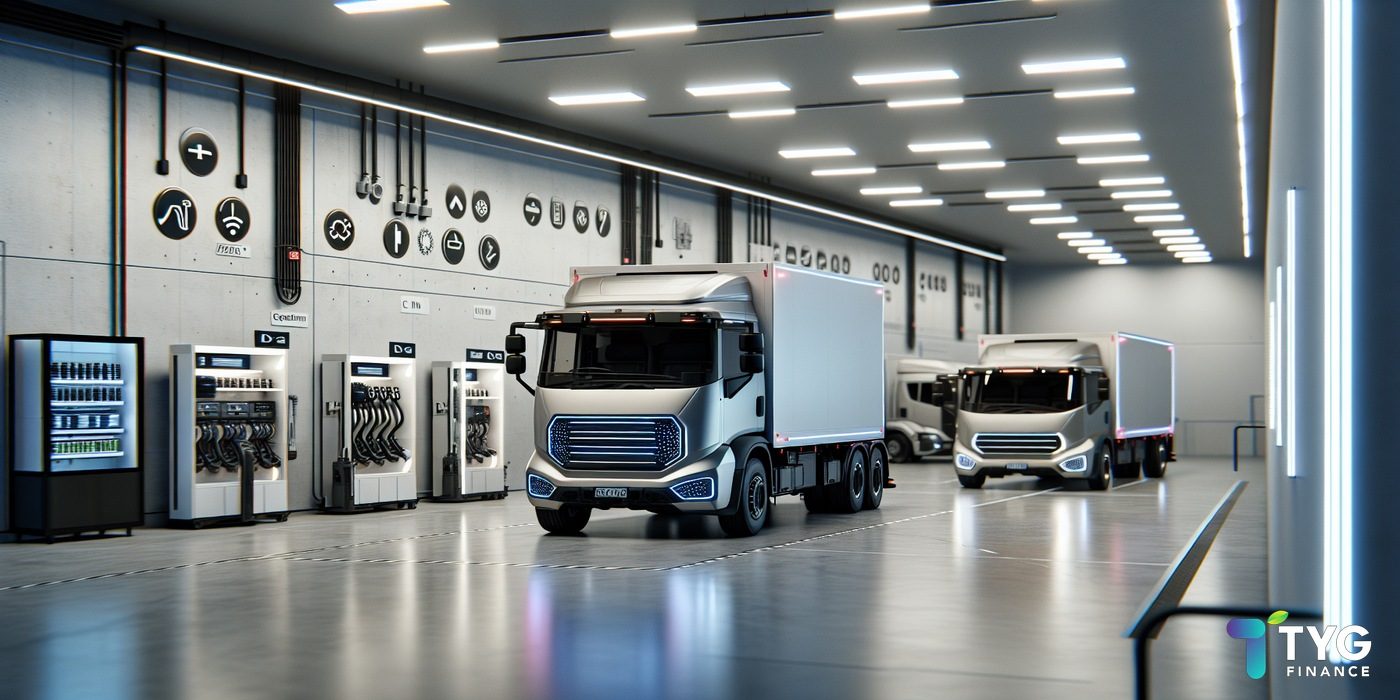
Light commercial vehicles for Australian trades and service operators are experiencing significant technological and market shifts in 2026. Electric vehicles, hybrid powertrains, advanced fit-out systems, and connectivity features are reshaping how tradespeople select, finance, and operate work vehicles.
This article examines the key trends affecting light commercial vehicles for Australian service businesses, exploring what’s changing, why it matters, and how operators might consider these developments when planning vehicle acquisitions.
At a glance
Electric and hybrid LCVs, smarter fit-outs, telematics and tightening safety mandates are all reshaping how Australian trades vehicles are specified in 2026, but the right technology choice depends on matching daily distance, payload and charging access to the vehicle rather than following the trend, and finance structures are increasingly adapting to account for it.
Electric LCV Adoption: From Niche to Practical Alternative
Electric light commercial vehicles have transitioned from experimental curiosities to legitimate contenders for specific Australian trade applications in 2026. Major manufacturers now offer electric vans and utes with specifications approaching diesel equivalents: Ford E-Transit, Mercedes eSprinter, and BYD Shark provide genuine commercial capacity, with Toyota, Isuzu, and Mitsubishi launching Australian LCV EVs throughout 2026.
Real-world viability for metro operations:
Range for loaded commercial EVs now reaches 250-350km in metro conditions, sufficient for most urban service operations. Fast-charging infrastructure along major corridors has improved, though regional coverage remains limited. Service operators covering predominantly metro territories with depot return patterns find current EV technology increasingly practical.
Total cost of ownership favours EVs in appropriate applications:
Purchase price premiums remain substantial, typically $20,000-$35,000 over diesel equivalents. However, electricity costs approximately one-third of diesel per kilometer, servicing requirements are minimal, and depreciation rates are stabilizing. A Sydney electrician operating in metro Sydney reported saving $320 per van per week on fuel alone after switching to electric, with virtually no servicing costs. (Note: This is one operator’s reported experience in specific circumstances and is not a typical or guaranteed outcome. Individual results vary significantly based on usage patterns, vehicle type, routes, and other factors.)
$320/week
Fuel savings reported by one Sydney electrician after switching a van to electric – an individual result, not a typical or guaranteed outcome.
Payload capacity remains the critical limitation:
Electric powertrains and battery packs add significant weight, reducing available payload. A medium-wheelbase diesel van offering 1,200kg payload might provide only 800-900kg in equivalent EV form. Operators must calculate actual load requirements carefully rather than assuming EVs match diesel capacity.
Finance structures evolving:
Van finance arrangements for EVs increasingly factor total cost of ownership rather than purchase price alone. Some lenders now offer terms recognizing lower operating costs and potential government incentives, though operators should verify how residual values are calculated.
Hybrid Powertrains: Pragmatic Middle Ground
Hybrid light commercial vehicles offer a practical option for operators seeking fuel economy improvements without EV range limitations.
Mild hybrid becoming standard equipment:
Many 2026 LCV models incorporate 48-volt mild hybrid systems as standard. These capture braking energy and enable smoother start-stop functionality. Fuel savings of 8-12% in urban driving make this technology essentially free. It’s simply becoming baseline specification.
Full hybrid options expanding:
Toyota’s proven hybrid system appears in more commercial applications, with Ford offering hybrid variants across Transit ranges. These deliver 20-30% better fuel economy than diesel in stop-start urban work, directly impacting daily costs for high-mileage operators.
20-30%
Better fuel economy full hybrid LCVs deliver over diesel in stop-start urban work, directly impacting daily running costs for high-mileage operators.
Modest payload compromises:
Hybrid systems add approximately 100-150kg compared to conventional drivetrains, manageable for most trades whilst delivering substantial fuel savings. Economics work particularly well for operators covering 40,000-60,000km annually in urban environments.
Finance structures resemble conventional vehicles:
The modest price premium ($5,000-$12,000 over diesel) means ute finance arrangements follow established patterns. Residual values track closely with conventional equivalents, reducing finance complexity.
Fit-Out Innovation: Modular and Intelligent Storage
Commercial vehicle fit-out technology has progressed beyond basic shelving to integrated systems optimized for specific trades.
Modular systems enable reconfiguration:
Modern systems from manufacturers like Ranger Design and Sortimo allow configuration changes as business needs evolve. An electrician expanding into data cabling can reorganize storage without rebuilding the entire fit-out.
Smart storage with inventory tracking:
High-end systems integrate RFID technology and weight sensors to track tool and parts inventory automatically. Mobile apps alert operators to missing tools before leaving the depot, particularly valuable for multi-person operations.
Lightweight materials improve payload:
Aluminum and composite storage systems reduce fit-out weight by 30-40% compared to steel. A 60kg weight saving translates directly to increased usable payload, significant for operators approaching GVM limits.
Integrated power management:
Modern fit-outs incorporate power systems with USB, 12V, and 240V outlets positioned throughout storage layouts. Solar panels integrated into van roofs or ute canopies maintain auxiliary batteries without draining starter batteries.
Finance implications of premium fit-outs:
Premium modular fit-outs cost $8,000-$15,000. Some business vehicle finance arrangements now include fit-out costs in vehicle finance terms, spreading investment rather than requiring upfront capital.
Connectivity and Fleet Management Technology
Commercial vehicles in 2026 generate substantial data about location, driving patterns, fuel consumption, and maintenance requirements.
Telematics becoming standard:
Major manufacturers include basic telematics as standard or affordable options. Operators with two or three vehicles can monitor location, fuel consumption, and driving behavior through smartphone apps, technology once exclusive to large fleets.
Predictive maintenance reduces downtime:
Connected vehicles alert operators to upcoming service based on actual usage rather than arbitrary intervals. Critical issues trigger alerts before catastrophic failure. This prevents costly breakdowns and reduces unplanned downtime.
Driver behavior monitoring:
Telematics tracks harsh braking, rapid acceleration, and excessive idling. Several insurers now offer premium discounts of 5-10% for vehicles with telematics and demonstrated safe driving patterns.
Integration with business systems:
Modern platforms integrate with accounting and job management systems, automatically allocating vehicle costs to specific jobs. This improves costing accuracy and reduces administrative overhead.
Data privacy considerations:
Operators should understand what data manufacturers and telematics providers collect, how it’s stored, and who can access it. The Australian Privacy Principles govern commercial use of location and operational data.
Safety Technology: From Optional to Mandatory
Safety technology in commercial vehicles has progressed rapidly, with many features transitioning from premium options to market expectations.
Autonomous emergency braking (AEB) standard:
Most 2026 LCV models include AEB as standard equipment, automatically braking if imminent collision is detected. The Australian New Vehicle Assessment Program (ANCAP) now requires AEB for five-star ratings.
Reversing cameras mandatory:
Rear-view cameras became mandatory for new vehicles in Australia from 2025. Commercial vehicles increasingly include side and front cameras, providing comprehensive visibility, particularly beneficial in tight urban environments.
Electronic stability control prevents rollovers:
Stability control calibrated for laden commercial vehicles helps prevent rollover incidents when cornering or taking evasive action. These systems adjust braking and power delivery to maintain stability.
Insurance implications:
Insurers increasingly recognize advanced safety technology, offering premium discounts of 5-15% for vehicles with AEB, stability control, and comprehensive camera systems.
Alternative Procurement Models
How Australian operators acquire vehicles is diversifying beyond traditional purchase and lease.
Subscription models offer flexibility:
Manufacturers and third-party providers offer vehicle subscriptions where operators pay monthly fees covering vehicle, insurance, servicing, and roadside assistance. Typical subscriptions run 1-6 months at $1,800-$2,400 monthly for medium vans, useful for testing business expansion or managing seasonal capacity.
Novated leasing gaining traction:
Some incorporated sole operators explore novated lease arrangements traditionally associated with passenger vehicles. This can offer tax advantages depending on business structure and individual circumstances, though professional accounting advice is essential.
Finance implications of alternatives:
Traditional business vehicle finance isn’t disappearing, but operators now have more options. Comparing total cost across different procurement models requires careful analysis: what appears cheaper monthly might cost more over the vehicle lifecycle.
Regulatory Changes Affecting Specifications
Australian regulations influencing commercial vehicle specifications continue evolving.
Emissions standards tightening:
Australia progressively aligns with Euro 6 emissions standards, driving manufacturers toward cleaner diesel, hybrids, and electric vehicles. This improves air quality but adds vehicle costs through sophisticated emissions control systems.
Safety equipment mandates increasing:
Mandatory safety features continue expanding beyond reversing cameras to potentially include AEB and electronic stability control. These mandates improve safety but typically add $2,000-$4,000 to vehicle costs.
Mass limits and licensing:
The National Heavy Vehicle Regulator (NHVR) continues refining mass limits and licensing requirements. Some higher-capacity LCVs now require specific licenses or training. Operators should verify requirements when specifying vehicles approaching 4.5-tonne GVM.
Questions and Answers
Should Australian tradies prioritize electric LCVs in 2026?
Electric LCVs make sense for specific applications: urban operations with depot charging, daily distances under 200km, and lighter payloads. Operators in these categories should evaluate EVs against diesel alternatives, focusing on total cost of ownership. However, operators covering regional territories, requiring maximum payload, or lacking charging infrastructure might find current EV technology limiting. Hybrid vehicles may offer a pragmatic option for improved efficiency without EV constraints. Match vehicle technology to actual operational requirements rather than following trends or assumptions.
How much should operators budget for modern commercial vehicle fit-outs in 2026?
Fit-out costs vary dramatically. Basic shelving might cost $2,500-$4,000. Mid-range modular systems with organized storage and power systems run $5,000-$8,000. Premium systems with smart inventory tracking and custom configuration can exceed $12,000-$15,000. Operators carrying $30,000-$50,000 in tools may find premium fit-outs justified through security, organization, and efficiency benefits. Well-designed fit-outs improve job efficiency, enhance security, and reduce injury risk through ergonomic design, benefits that can offset costs over the vehicle lifecycle.
Are telematics worth implementing in small operations with 2-3 vehicles?
Telematics provides genuine value even for small operations. Primary benefits include maintenance alerts preventing costly breakdowns, accurate job costing, and potential insurance discounts of 5-10%. Typical operating cost savings reach $50-$100 monthly per vehicle, plus reduced breakdown risk. Privacy considerations matter more in small operations where monitoring feels personal. The decision should balance practical benefits against any discomfort about location tracking. Many systems allow privacy modes during personal use whilst tracking business journeys for tax and costing purposes.
Helpful Australian Resources
Australian New Vehicle Assessment Program (ANCAP)
Safety ratings and testing for commercial vehicles.
Website: www.ancap.com.au
National Heavy Vehicle Regulator (NHVR)
Commercial vehicle compliance and mass limits.
Website: www.nhvr.gov.au
Safe Work Australia
Guidelines on vehicle fit-out and workplace safety.
Website: www.safeworkaustralia.gov.au
Electric Vehicle Council
EV adoption, charging infrastructure, and policy developments.
Website: www.electricvehiclecouncil.com.au
Assessing Trends Against Business Requirements
Light commercial vehicle trends in 2026 present opportunities for operators willing to assess technology against actual business requirements rather than following market hype or resisting change.
Document your operational realities:
- Daily distance patterns tracked over a typical month
- Charging access assessment for depot or home
- Actual payload requirements versus vehicle capacity
- Urban versus regional operation quantification
- Current fuel and maintenance cost baselines
This documentation helps evaluate whether emerging technology genuinely suits your operation versus adding cost without benefit.
Technology adoption doesn’t require wholesale replacement:
Consider introducing one electric or hybrid vehicle for specific applications whilst retaining conventional vehicles for unsuitable work. This reduces risk whilst allowing practical evaluation in real-world conditions.
TYG Finance works with Australian service operators exploring light commercial vehicle finance solutions that might align with evolving vehicle technology and operational requirements. We understand that trades and service businesses face complex decisions when technology, costs, and practical requirements intersect.
Ready to discuss vehicle finance options? Contact TYG Finance to explore ute finance, van finance, or fleet finance structures that could work for your circumstances, including emerging technologies like electric and hybrid commercial vehicles.
Contact TYG Finance today to discuss commercial vehicle finance options as vehicle technology continues evolving.
Important Disclaimer
This trend article is provided for general informational purposes only and should not be considered financial, legal, technical, or professional advice. The information presented reflects general market observations and technology trends as of early 2026.
Vehicle technology evolves rapidly. Specifications, capabilities, costs, and availability may change. Operators should verify current information with manufacturers before making decisions.
Vehicle finance applications are subject to individual assessment. Interest rates, fees, terms, and conditions vary based on circumstances, lender criteria, and market conditions.
Before making vehicle purchase or finance decisions, you should:
- Consult with qualified accountants regarding tax implications
- Seek independent financial advice about your circumstances
- Verify vehicle specifications and suitability for intended use
- Review all loan documentation carefully
- Consider cash flow, growth plans, and operational requirements
- Evaluate total cost of ownership beyond purchase price
TYG Finance is a commercial finance broker. We may receive commissions from lenders for successful finance arrangements. This article does not constitute a recommendation to enter into any specific financial product.
All applications subject to lender approval. Information current as of publication date and may change.
About TYG Finance
TYG Finance is an Australian commercial finance broker specializing in vehicle and equipment finance solutions for service businesses and trade operators. We work with lenders to help operators explore finance options that may suit their operational circumstances.
Disclaimer: This article is provided for general information only. TYG Finance recommends seeking independent financial advice before making finance decisions.
Related Articles
- Financing a Tradie Fleet: Practical Choices and Trade-Offs – Read about practical fleet financing approaches
- Choosing Between Utes and Vans for Service Work – Review vehicle selection factors in detail
- Specialised Transport Finance Trends for 2026 – Compare with specialized transport trends