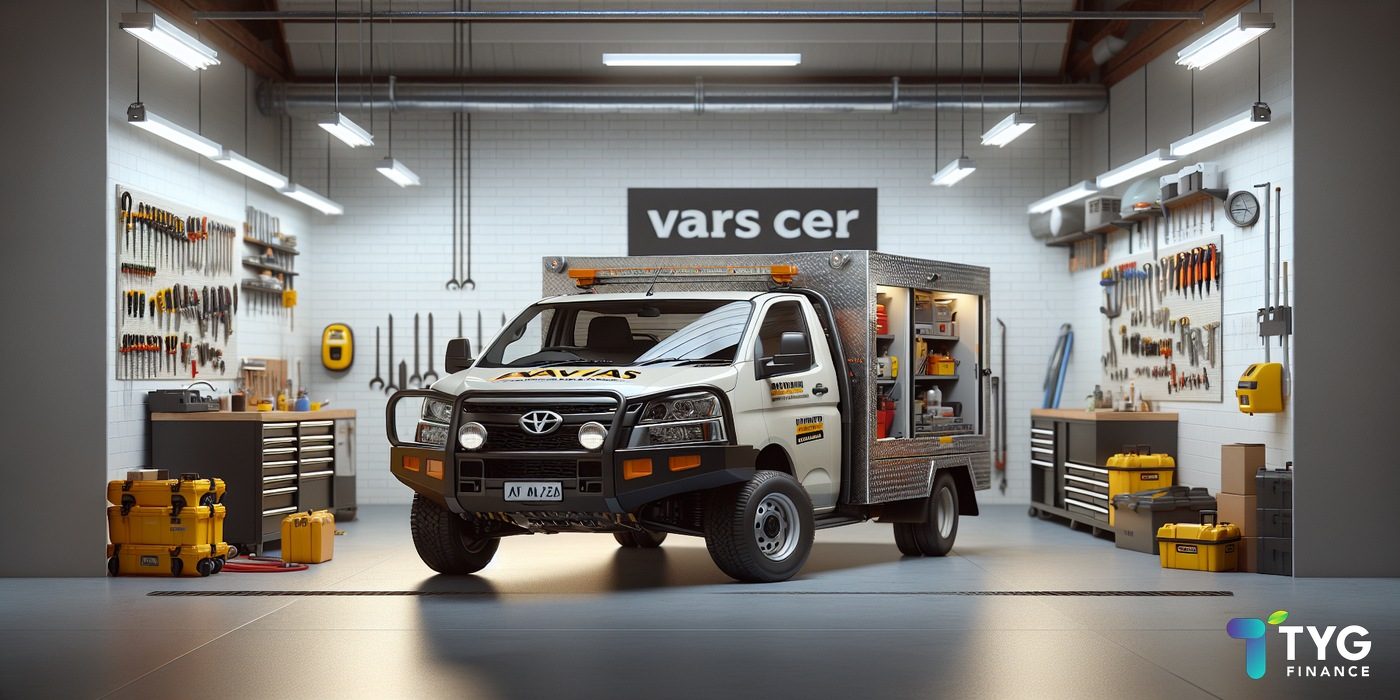
Choosing between a ute and a van is a decision that shapes daily efficiency, running costs and business capability for Australian service operators, and payload requirements, security needs and site access considerations usually matter more than brand preference or personal familiarity. Here’s what actually drives the decision for plumbers, electricians, HVAC technicians, locksmiths and other service operators working across metro and regional Australia.
At a glance
Payload, security and access requirements should drive the ute-versus-van decision, not habit or industry norms. A dual-cab ute can lose up to 60% of its GVM to occupants, fuel and fit-out, while an equivalent van often retains 1,100kg+ of usable payload. Get the numbers right before financing either.
Working through the decision systematically
The ute versus van question isn’t really about which vehicle type is objectively better, both serve legitimate purposes depending on the operational requirement, and operators who assess their needs systematically tend to make more cost-effective choices than those who simply default to a familiar vehicle type.
A handful of core factors drive the decision in practice. Payload and equipment needs vary enormously between trades: a locksmith might operate comfortably from a small van with 600kg payload capacity, while an HVAC technician installing ducted systems could need a ute with 1,200kg+ capacity for heavy equipment and materials. Security matters more than most operators initially weight it, tool and equipment theft from vehicles remains a persistent, well-documented issue for Australian tradies according to the Insurance Council of Australia, and enclosed vans carry an inherent security advantage over open ute trays, though a good canopy partially closes that gap. Access and manoeuvrability shape where work can actually happen, urban service work regularly involves tight residential streets, underground car parks and restricted site access, so vehicle dimensions, turning circles and height clearances directly affect where an operator can work efficiently. And weather protection genuinely matters given Australia’s climate variability, from Queensland’s tropical storms to Victoria’s temperature swings, particularly for water-sensitive electronics, documentation and materials that need enclosed storage.
These factors interact with business structure, client expectations and finance considerations into a genuinely complex decision, one that’s worth handling systematically rather than instinctively.
Payload capacity: GVM and the real-world numbers
Gross Vehicle Mass (GVM) defines the maximum safe operating weight of a vehicle, the vehicle itself, occupants, fuel and load combined. The National Heavy Vehicle Regulator (NHVR) oversees compliance, though light commercial vehicles under 4.5 tonnes typically fall under standard licensing.
Working out real usable payload takes more than subtracting tare weight from GVM, it needs to account for base vehicle weight, driver and any passengers, fuel (roughly 75kg for a full tank), permanent fit-out like shelving, toolboxes and equipment racks, safety equipment and spare parts, and the average daily load of materials and tools. A popular dual-cab 4×4 ute with a GVM of 3,150kg and a tare weight of 2,050kg can end up with only 750-800kg of genuinely usable payload once two occupants, fuel, and a 120kg canopy and toolbox setup are accounted for. A medium-wheelbase van with a similar GVM but single-cab configuration, by contrast, can offer 1,100-1,200kg of usable payload, a meaningful difference for trades like plumbing that regularly carry copper pipe and fittings in volume.
750-800kg
usable payload on a typical dual-cab 4×4 ute after occupants, fuel and canopy
1,100-1,200kg
usable payload on a comparable medium-wheelbase van
4×4 versus 4×2 adds another layer: four-wheel drive capability adds weight and reduces available payload, and operators working exclusively in metro areas often find a 4×2 sufficient, gaining better fuel economy and more payload in the trade-off, while regional operators or those servicing rural properties often prioritise 4×4 capability despite the payload cost. The ATO provides guidance on record-keeping requirements for business vehicles, including documentation of business use, which can help inform the right specification for a given operation.
Security and tool protection: weighing up the theft cost
Tool and equipment theft creates both direct financial loss and real operational disruption. Safe Work Australia’s guidelines emphasise secure storage of tools and equipment, and insurance considerations increasingly factor into vehicle selection as a result.
Vans carry inherent security advantages: enclosed storage with no external visibility, single-point locking where cabin and cargo share the same security, genuine difficulty accessing the cargo area without obvious forced entry, and a professional appearance that can deter opportunistic theft on its own. Utes fitted with quality canopies offer moderate security, enclosed storage once fitted, but with more vulnerability through multiple access points (tailgate, side windows), canopy-to-tray seals that can be compromised more easily than a van body, and mounting hardware that’s sometimes visibly obvious. Open ute trays are the least secure option of all: complete load visibility from every angle, no meaningful deterrent, and typically only workable for low-value loads or when paired with secure lockable storage boxes.
Service operators carrying $15,000-$30,000 in tools, diagnostic equipment and materials face a genuinely material risk from vehicle-based theft, and it’s a common enough experience across the trades that plenty of operators who’ve been through a break-in end up switching from utes to vans afterward, both for the security itself and for the flow-on reduction in insurance premiums that tends to follow. The security equation extends past theft too, enclosed vehicles protect sensitive equipment from moisture, dust and temperature extremes, which matters particularly for electricians carrying testing equipment or HVAC technicians with electronic controls.
Manoeuvrability and access: what actually fits on site
Urban service work demands vehicles that handle efficiently through residential streets, multi-storey car parks and congested commercial zones, and vehicle dimensions create real practical constraints on daily operations. A typical dual-cab 4×4 ute runs 5.2-5.4m long, 1.8-1.9m wide, 1.8m tall unladen (2.2m with a canopy fitted), with a 12.0-13.0m turning circle and rear or tailgate cargo access. A typical medium-wheelbase van runs 5.0-5.3m long, slightly wider at 1.9-2.0m, 1.9-2.1m tall, with a tighter 11.5-12.5m turning circle and access through rear doors plus a side slider, generally offering more flexible cargo access than a ute. Length differs only marginally between the two, but height, turning circle and access options matter a lot more in practice.
Height proves critical in a few recurring scenarios: underground car park access typically needs 2.0-2.1m clearance, residential garage entry for internal work has its own limits, drive-through access at commercial sites varies by site, and multi-storey building service areas often impose their own restrictions. A number of operators working in dense inner-city environments report that a canopy-fitted ute becomes too tall for a meaningful share of the car parks their clients use, forcing street parking, sometimes several blocks away, and carrying heavy equipment further than necessary as a result, a real efficiency cost that’s easy to underestimate until it’s actually being lived with day to day.
Cargo access patterns differ meaningfully too. Vans with rear barn doors and a sliding side door offer access from three sides even in tight spaces, while utes generally require rear access unless fitted with side toolboxes, and canopy access can be awkward in height-restricted environments. For a service operator, the vehicle is effectively a mobile workshop, and how easily tools can be reached, materials loaded and unloaded, and work done directly from the vehicle has a real bearing on daily efficiency.
Fuel efficiency: what it actually costs per kilometre
Service operators covering 40,000-60,000km a year find fuel economy differences translate into real annual costs. Recent diesel engine improvements have narrowed the gap between vehicle types, but distinct patterns remain: small car-based vans typically run 6.5-8.0L/100km, medium purpose-built vans 7.5-9.5L/100km, dual-cab 4×2 diesel utes 7.5-9.0L/100km, dual-cab 4×4 diesel utes 8.5-11.0L/100km, and dual-cab petrol utes 10.0-13.0L/100km.
$10,000
is roughly what a 2L/100km fuel efficiency gap costs over a typical 5-year vehicle lifecycle at 50,000km a year, before any other running cost differences are counted.
At current diesel prices (roughly $2.00/L in metro areas), a 2L/100km difference over a 50,000km annual distance works out to about $2,000 a year in fuel cost variation. Real-world consumption is also shaped by urban versus highway driving (stop-start city work penalises heavier vehicles more), load weight (heavier consistent loads favour a vehicle with the right power-to-weight ratio), aerodynamics (canopies and roof racks increase ute consumption, while van bodies are generally designed to optimise airflow), and driving patterns (frequent short trips disadvantage all vehicle types compared to consistent longer-distance travel). Several operators who’ve switched from 4×4 utes to 4×2 utes or vans for metro-only work report 15-20% fuel savings without losing operational capability, savings that flow directly into monthly cash flow, worth factoring into any business vehicle finance structuring.
How vehicle type shapes the finance
Ute finance and van finance arrangements can differ in a few practical respects. Utes, particularly popular dual-cab diesel 4×4 models, have historically held stronger resale values in Australia than commercial vans, which affects both depreciation on a purchased vehicle and residual value calculations on a financed one. Van insurance typically runs 10-15% higher than equivalent ute insurance, reflecting higher theft rates and repair costs, an ongoing expense worth building into total cost of ownership calculations. Fit-out costs also differ, van fit-outs (shelving, racking, partitions) often run $3,000-$8,000 depending on complexity, while ute canopies and drawer systems run $2,500-$6,000, and these can sometimes be rolled into fleet finance arrangements, spreading the cost over the finance term rather than requiring upfront capital.
Tax treatment can also vary depending on business structure and individual circumstances, worth discussing directly with a qualified accountant to understand how vehicle type and finance structure interact with your specific tax position. And businesses running multiple service vehicles might do better with a consolidated fleet finance arrangement, offering payment consistency and potentially better terms than financing each vehicle separately. The ATO offers detailed guidance on business vehicle tax treatment, deductions and record-keeping that’s worth reviewing alongside professional advice.
How different trades tend to choose
Distinct patterns show up across service industries, reflecting each trade’s specific operational priorities. Plumbers increasingly favour vans for the security of expensive tools and copper materials, weather protection for fittings and fixtures, and a more professional appearance for residential work, with payload requirements typically modest outside specialised drainage or gas-fitting jobs. Electricians split fairly evenly between vans (residential and commercial service work) and utes (construction and industrial applications), since cable reels and conduit often suit ute carrying while test equipment and power tools benefit from van security. HVAC technicians commonly choose utes for the payload capacity needed for compressors, ducting and refrigerant bottles, with external frames and pipe carriers suiting ute configurations, and some run mixed fleets, vans for service calls, utes for installations. Locksmiths and security technicians overwhelmingly favour small to medium vans, driven by minimal payload needs, high-value tool collections and the professional appearance residential customers expect, with electronic safes and commercial hardware occasionally pushing toward larger capacity. General maintenance operators often select utes for versatility across landscaping equipment, building materials and waste removal, valuing the flexibility to carry awkward or dirty loads that suits variable maintenance work. Mobile mechanics typically choose vans for a weather-protected mobile workshop setup, secure tool storage and professional presentation, with larger vans accommodating diagnostic equipment, parts inventory and specialty tools.
These patterns aren’t prescriptive, individual operators with specific requirements can legitimately deviate significantly, but they reflect collective industry experience about which vehicle types tend to support which operational models best.
Questions and Answers
Should service operators always choose the vehicle type most common in their industry?
Industry patterns provide useful guidance but shouldn’t override assessment of your specific operational requirements. A plumber working primarily on construction sites might legitimately prefer a ute despite most plumbers favoring vans, if their work involves regular heavy materials transport. Conversely, an electrician might choose a van despite many electricians using utes, if their work focuses on security-sensitive residential service calls with expensive diagnostic equipment. The key is matching vehicle capability to your actual daily requirements rather than defaulting to industry norms that may not reflect your specific situation.
How do payload requirements change when transitioning from solo operation to employing staff?
Adding employees typically increases payload requirements significantly. A second person adds approximately 80-100kg, their tools and equipment might add another 100-150kg, and the tendency to carry more materials to service multiple jobs increases load further. Solo operators sometimes discover their current vehicle becomes inadequate when employing staff. This is particularly relevant when considering vehicle finance terms, if you anticipate business growth, selecting a vehicle with payload capacity to accommodate future staffing makes sense, even if it seems excessive for current solo operation. Some operators find it more practical to run multiple vehicles as they grow, matching vehicle size to specific roles rather than trying to create a single vehicle that handles all scenarios.
Do electric vans or utes make sense for service operators in 2026?
The practical viability of electric service vehicles depends heavily on specific operational patterns. Service operators covering predominantly metro areas with daily distances under 150km, depot charging capability, and lighter payload requirements may find current electric vans practical. The significantly lower running costs (electricity versus diesel/petrol) and reduced maintenance can offer financial benefits. However, operators covering larger territories, requiring maximum payload capacity, or lacking reliable charging infrastructure might find current EV technology limiting. Purchase prices remain higher than diesel equivalents, though total cost of ownership over the vehicle lifecycle may favor EVs in appropriate circumstances. Each operator should assess their specific situation, daily distance, typical loads, charging access, and upfront budget, rather than assuming EVs are universally suitable or unsuitable. The technology continues evolving rapidly, and what isn’t practical today might become viable within typical vehicle replacement cycles.
Helpful Australian Resources
National Heavy Vehicle Regulator (NHVR)
Information on vehicle compliance, mass limits, and regulatory requirements for commercial vehicles.
Website: www.nhvr.gov.au
Australian Taxation Office (ATO)
Guidance on business vehicle tax treatment, deductions, record-keeping, and depreciation.
Website: www.ato.gov.au
Safe Work Australia
Guidelines on vehicle safety, load restraint, and workplace health and safety requirements.
Website: www.safeworkaustralia.gov.au
Australian Bureau of Statistics (ABS)
Transport statistics and business data providing context for vehicle usage and industry trends.
Website: www.abs.gov.au
Choosing your service vehicle: a practical approach
Service operators tend to do better with a systematic assessment than an instinctive choice. It’s worth documenting actual requirements before deciding: average daily payload tracked over a typical fortnight rather than guessed at, the value of tools and equipment regularly carried in the vehicle, how often height restrictions or tight access actually get encountered, the real split between urban and highway kilometres covered, and whether growth plans like employing staff or expanding services might change requirements down the track.
This kind of documentation serves more than one purpose, it informs the vehicle selection itself, supports the finance application, and provides a solid basis for tax record-keeping.
TYG Finance works with Australian service operators to explore commercial vehicle finance solutions that might align with operational requirements and cash flow management. We understand that plumbers, electricians, HVAC technicians, and other service businesses have distinct needs when selecting and financing work vehicles.
Ready to discuss your service vehicle finance options? Contact TYG Finance to explore how we might be able to support your vehicle finance needs. Our team can help you assess finance structures that could work for your specific business situation.
Contact TYG Finance today to discuss ute finance, van finance, or business vehicle finance options for your service operation.
Important Disclaimer
This insight article is provided for general informational purposes only and should not be considered financial, legal, or professional advice. The information presented reflects general market observations and should not be interpreted as recommendations for specific vehicle selection or finance arrangements.
Vehicle finance applications are subject to individual assessment, and approval is not guaranteed. Interest rates, fees, terms, and conditions vary based on individual circumstances, lender criteria, and market conditions. The considerations discussed in this article relate to general scenarios and may not reflect outcomes for specific businesses.
Every service operator’s situation is different. Before making vehicle purchase or finance decisions, you should:
- Consult with a qualified accountant regarding tax implications and business structure considerations
- Seek independent financial advice about your specific circumstances
- Carefully review all loan documentation and terms before committing
- Consider your business’s cash flow, growth plans, and operational requirements
- Ensure vehicle selection meets relevant safety and compliance standards
Vehicle selection should be based on thorough assessment of your actual operational requirements, professional advice relevant to your specific situation, and careful consideration of total cost of ownership beyond purchase price alone.
TYG Finance is a commercial finance broker. We may receive commissions from lenders for successful finance arrangements. This article does not constitute a recommendation to enter into any specific financial product or arrangement.
All finance applications are subject to lender approval and individual circumstances. Information provided is current as of the publication date and may change.
About TYG Finance
TYG Finance is an Australian commercial finance broker specializing in vehicle and equipment finance solutions for service businesses and trade operators. We work with a panel of lenders to help service operators explore finance options that may suit their specific operational circumstances.
Disclaimer: This article is provided for general information only. TYG Finance recommends seeking independent financial advice before making finance decisions.
Related Articles
- Financing a Tradie Fleet: Practical Choices and Trade-Offs – See a practical case study of fleet financing decisions
- Light Commercial Vehicle Trends in the Trades for 2026 – Discover emerging LCV trends that may affect your choice
- Annual Finance Review and Refinance Opportunities – Plan your long-term financing strategy