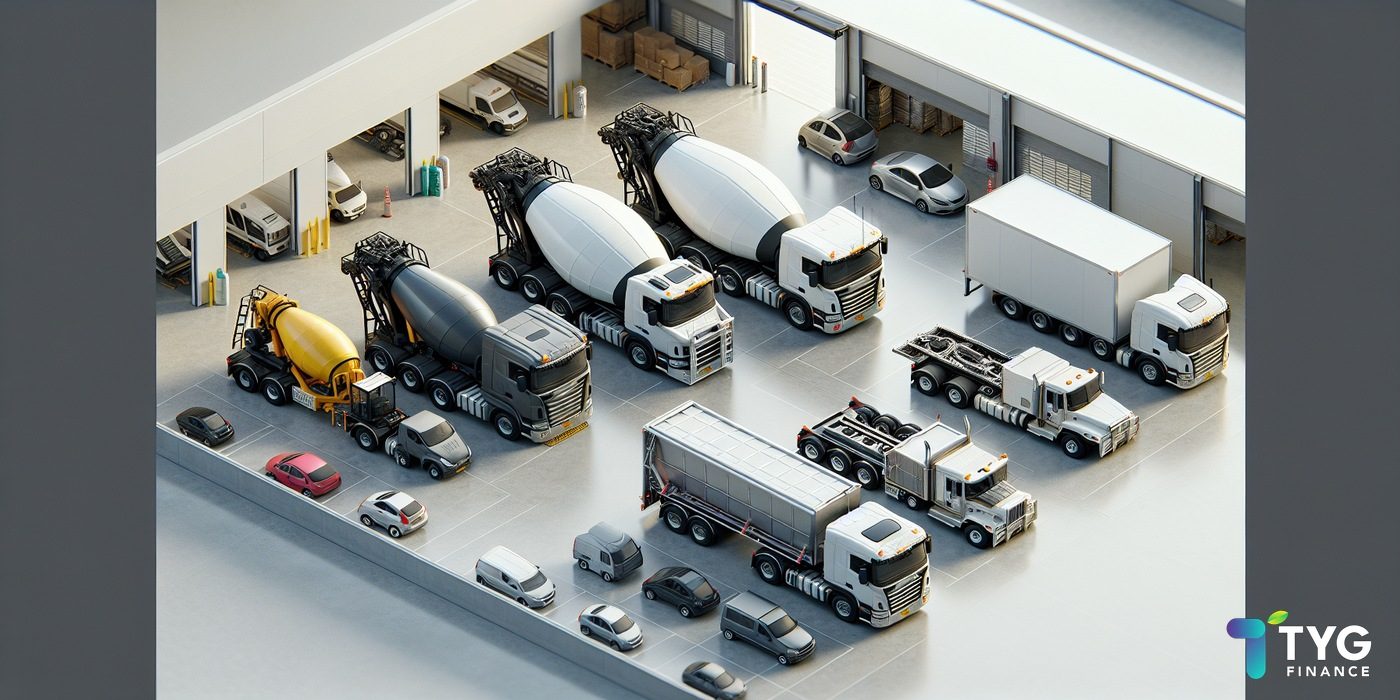
Concrete pumps, agitators, car carriers, refrigerated B-doubles: specialised transport assets don’t behave like a standard prime mover and trailer when it comes to financing. The price tags are bigger, the wait for delivery is longer, and the equipment serves a narrower slice of the freight market. None of that makes specialised transport a bad investment, but it does mean the finance side needs more thought than a straightforward truck purchase.
This guide looks at the finance structures, timing decisions, and risk management that actually reduce cash flow strain for operators building out niche transport capability.
At a glance
Specialised transport assets carry higher price tags, longer delivery lead times and narrower resale markets than a standard truck, so the finance side needs deliberate structuring, balloon payments, staged acquisition, delayed-commencement repayments, and a genuine cash reserve, to avoid a cash flow shock before the equipment is earning.
Why specialised transport finance is a different problem
A standard prime mover and trailer runs $250,000-$350,000. Specialised gear is in a different league entirely: concrete pump trucks commonly run $800,000-$1,200,000, car carriers $400,000-$600,000, refrigerated B-doubles $350,000-$500,000. That alone changes how much finance structuring matters, since the cash reserves needed to support a purchase like this bear no resemblance to a standard truck deal.
Delivery timing compounds it. A standard truck arrives in 3-6 months. Specialised equipment often takes 12-18 months from order to delivery, which means committing to finance well before any revenue shows up to service it. Resale is narrower too, generic trucks appeal to a broad buyer pool and hold value accordingly, while specialised equipment serves a smaller market, which makes residual value harder to pin down and something finance arrangements need to account for explicitly rather than assume away.
And the asset itself is rarely the whole cost. Licensing, insurance, permits and driver training for specialised transport commonly add $15,000-$40,000 before the equipment earns a dollar, a cost that’s easy to underestimate if the planning stops at the purchase price.
Finance structures that actually reduce the cash flow hit
A few structuring approaches consistently help here. Staged finance with delayed commencement, where settlement happens before operational readiness but repayments only start once revenue does, is one of the more useful ones, though it requires a lender product that specifically supports it, not every finance arrangement does.
Balloon or residual structures are the more familiar lever: a $600,000 asset over five years with no balloon runs around $11,800 a month, while a 30% balloon brings that down to roughly $9,000, a $2,800 monthly saving that adds up to about $33,600 a year during the period cash flow is tightest. The trade-off is obvious but worth stating plainly: a substantial payment lands at term end, and that needs a plan, whether refinancing, sale proceeds, or reserves built up along the way.
$33,600/yr
Cash flow freed up by structuring a $600,000 asset with a 30% balloon rather than no balloon, roughly $2,800 a month during the period cash flow is tightest.
Phasing the acquisition itself, buying one unit, proving out the operational model, then adding more once revenue patterns are established, spreads the cash flow impact and gives real operational data to inform the next purchase rather than betting on projections alone. And it’s worth checking whether a manufacturer or distributor offers vendor finance directly. They have a strong commercial interest in the sale, which sometimes translates into terms worth comparing against a standard equipment finance arrangement.
Timing the purchase matters as much as structuring it
Acquiring expensive, narrow-application equipment speculatively is a real risk. The safer sequence is securing revenue certainty first, and plenty of operators build that into contract negotiations directly, essentially telling a client “we can commit to this if we secure the right capacity,” which turns the equipment purchase into a response to confirmed demand rather than a bet on future demand.
Seasonal patterns matter too. A refrigerated operator serving agricultural export is far better off with new capacity landing just before harvest than in the middle of winter. Regulatory lead time deserves the same attention: permits, certifications and route approvals for specialised transport should be sorted before the equipment arrives, not after, since finance costs accumulate regardless of whether the paperwork is done. And operational readiness, driver training, system integration, getting procedures bedded in, takes real time, which is exactly why a delayed-commencement structure or a cash flow plan that assumes lower utilisation early on tends to work better than assuming full productivity from day one.
The deposit is usually bigger than people expect
Specialised equipment commonly requires a 20-30% deposit, which on a high-value asset works out to $150,000-$300,000 in cash. That’s a substantial number to find, and a few alternatives to a straight cash deposit are worth exploring: working capital finance that covers the deposit and gets repaid from operating cash flow once the asset is earning, splitting the deposit into two or three instalments rather than one lump sum, or applying trade-in equity from existing equipment toward the requirement.
$150k-$300k
The cash deposit typically required on high-value specialised transport equipment, based on the usual 20-30% deposit requirement.
On equipment with a 12-18 month delivery window, there’s an additional risk worth managing: a deposit sitting with a supplier for well over a year if that supplier runs into financial difficulty. Bank guarantees, escrow arrangements with progressive release, and a proper financial assessment of the supplier before committing funds are all worth investigating rather than assuming the deposit is simply safe because a contract says so.
What tends to go wrong, and how to build in a buffer
A handful of risks come up repeatedly with specialised transport acquisitions. Delivery delays are common enough that a 12-month projection stretching to 18-24 months through supply chain disruption shouldn’t come as a shock, which argues for finance with some delivery flexibility built in, delay provisions in client contracts, and cash reserves that can absorb an extended wait.
Utilisation frequently comes in below projection in the early months, 35-40% against a hoped-for 60-70% isn’t unusual, so building the business case around “we need 50% to break even” rather than “we need 75%” gives genuine buffer rather than a plan with no margin for error. Operating costs are worth padding too, 20-30% above initial estimates is a sensible allowance for the servicing, parts availability, insurance and compliance surprises that specialised equipment tends to throw up. And because niche operations are more exposed to shifts in a single market than generalist ones, diversifying revenue streams, geography, or adjacent applications for the equipment is genuinely worth building into the plan rather than treating as an afterthought.
Questions and Answers
Should operators acquire specialised transport without secured contracts?
Doing it speculatively carries real risk, given the high capital cost, ongoing finance obligations, and the operational overhead that keeps accumulating whether or not the equipment is earning. That said, some operators do successfully build capability ahead of confirmed demand in emerging markets, where being first with the right capacity is itself a competitive advantage. Whether that’s the right call depends on financial resilience (can the business genuinely absorb 6-12 months of underutilisation without strain?), how solid the market read actually is versus how much of it is hope, and what alternative revenue options exist if the anticipated demand is slower to materialise. Operators with a strong balance sheet have more room to justify a speculative purchase. Those with thinner reserves are better served waiting for revenue certainty before committing.
How much cash reserve should operators maintain when financing specialised assets?
A practical reserve usually has three components. An operational buffer covering 3-6 months of finance repayments plus running costs, commonly $60,000-$120,000 on a $600,000 asset. A reserve for unexpected equipment issues or delays, typically $30,000-$50,000. And an opportunity reserve to respond to unexpected contracts or challenges, often $40,000-$70,000. Put together, that’s a target of roughly $130,000-$240,000 in reserve when acquiring a major asset. Operators who go in undercapitalised often end up forced into accepting unfavourable contracts, deferring maintenance they shouldn’t defer, or facing a genuine crisis from what should have been a minor setback.
Is leasing preferable to purchase for specialised transport?
It depends on the intended holding period more than anything else. Leasing offers a lower upfront commitment and flexibility to upgrade, but it typically costs more than purchase finance over an equivalent term and builds no equity in the asset. Operators planning to keep equipment long-term, 7-10 years or more, generally come out ahead purchasing. Those expecting to turn equipment over every 3-5 years might find leasing genuinely suits them better, and operators without ready access to purchase finance may lease out of necessity rather than preference. The only way to know which applies is to model both approaches against realistic assumptions rather than comparing headline monthly costs at face value.
Helpful Australian Resources
Australian Competition and Consumer Commission (ACCC)
Guidance on commercial transactions and protecting advance payments.
Website: www.accc.gov.au
National Heavy Vehicle Regulator (NHVR)
Compliance requirements for specialized transport.
Website: www.nhvr.gov.au
Safe Work Australia
Workplace safety guidelines for specialized equipment operation.
Website: www.safeworkaustralia.gov.au
Australian Taxation Office (ATO)
Tax treatment of equipment finance and depreciation.
Website: www.ato.gov.au
Building the business case before the purchase
A properly documented business case makes both the finance conversation and the operational planning easier. That means revenue projections built on conservative utilisation assumptions rather than best-case ones, realistic operating cost estimates that account for specialised servicing, a 12-24 month cash flow projection rather than a single-year snapshot, honest risk scenarios covering delivery delays, utilisation shortfalls and cost blowouts, and a genuine answer to what happens if the assumptions don’t hold.
It’s also worth comparing more than one finance path properly, traditional asset finance, vendor finance, and lease structures each carry different cash flow profiles, tax treatment and risk characteristics, and the right answer isn’t always the most obvious one.
TYG Finance works with Australian transport operators exploring finance solutions for specialized transport assets whilst managing cash flow impact. We understand that concrete pumps, refrigerated transport, car carriers, and specialized equipment involve complex finance decisions where structure matters as much as rate.
Ready to discuss specialized transport finance? Contact TYG Finance to explore concrete pump finance, concrete agitator finance, truck finance, trailer finance, or bus finance structures for your circumstances.
Contact TYG Finance today to discuss how finance structuring might help you acquire specialized transport capability without cash flow crisis.
Important Disclaimer
This guide is provided for general informational purposes only and should not be considered financial, legal, or professional advice. Finance applications are subject to individual assessment. Interest rates, fees, terms, and conditions vary based on circumstances, lender criteria, and market conditions.
Before making equipment purchase or finance decisions, you should:
- Consult with qualified accountants regarding tax implications
- Seek independent financial advice about your circumstances
- Review all loan documentation carefully
- Conduct thorough due diligence on equipment suppliers
- Assess market demand realistically
- Ensure adequate working capital reserves
TYG Finance is a commercial finance broker. We may receive commissions from lenders for successful finance arrangements. This article does not constitute a recommendation to enter into any specific financial product.
About TYG Finance
TYG Finance is an Australian commercial finance broker specializing in vehicle and equipment finance solutions for transport operators and asset-backed businesses.
Disclaimer: This article is provided for general information only. TYG Finance recommends seeking independent financial advice before making finance decisions.
Related Articles
- Staged Asset Finance for the Specialist Operator – See a case study of staged finance in action
- Niche Transport Asset Finance: A Practical Guide – Explore niche transport finance considerations
- Temperature-Controlled Fleet Finance Guide – Learn about specialized refrigerated transport financing