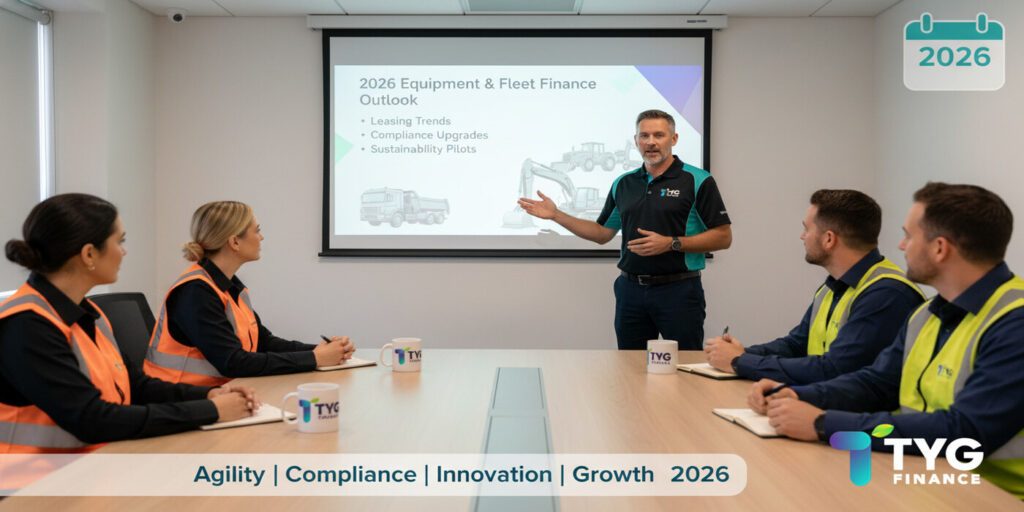
An Industry That Never Stands Still
For owner-operators and contractors across transport, mining, agriculture, and construction, 2026 is already shaping up to be another year of change. Market conditions, regulatory updates, and financing innovation continue to evolve.
The question isn’t whether change will come – it’s how operators will respond. From leasing trends to compliance-driven upgrades, from data-led decision making to agricultural repayment structures, financing in 2026 is expected to look different than it did just a few years ago.
This article explores emerging themes and what they could mean for asset-backed businesses managing fleets and heavy machinery in the year ahead.
At a glance
Six financing trends are set to shape 2026 for transport, mining, agriculture and construction operators: blended lease/purchase strategies, tighter NHVR compliance driving upgrade financing, telematics data feeding into lending decisions, seasonal repayment structures for agriculture, early pre-approval to beat supply and rate pressures, and early-stage financing for hybrid or electric pilots. Agility across all six is what separates operators who stay ahead from those who react late.
Trend 1: Leasing vs Purchasing – The Debate Deepens
Leasing Gains Ground
Leasing continues to gain popularity for businesses wanting flexibility, access to newer technology, or lower upfront costs. Many operators use leasing to:
- Upgrade machinery without long-term ownership risk.
- Treat repayments as operating expenditure instead of capex.
- Minimise balance sheet impacts when tendering for projects.
Purchasing Remains Essential
For high-utilisation assets such as prime movers, harvesters, and excavators, ownership through financing is often still the most cost-effective choice. These machines tend to hold residual value and provide certainty across multi-year projects.
Blended Strategies
A growing number of operators are mixing approaches – financing ownership of critical assets while leasing more specialised or seasonal machinery. This hybrid model balances flexibility with stability. For a deeper look at how total cost of ownership, safety requirements and financing choices fit together in day‑to‑day operations, see our fleet management guide on balancing costs and safety.
Explore Truck Finance facilities tailored for long-term fleet investment.
Trend 2: Compliance Pressures Will Shape Fleet Decisions
Emissions and Safety Standards
The National Heavy Vehicle Regulator (NHVR) and other bodies continue to tighten standards. Operators may face more scrutiny on:
- Emissions control systems.
- Operator protection measures.
- Fatigue and telematics requirements.
Financing as a Compliance Tool
Upgrading fleets and machinery is often less about chasing efficiency gains and more about maintaining compliance. Financing allows operators to make these necessary transitions without draining reserves.
NHVR updates provide ongoing detail on compliance changes expected in 2026. Our 2025 fleet safety and efficiency trends article outlines how these regulatory and technology pressures have been building – and why they’re accelerating into 2026.
Trend 3: Technology-Enabled, Data-Driven Decisions
Telematics Beyond Tracking
Telematics is now a standard tool – but in 2026, its role in financing decisions is expected to grow. By providing hard data on utilisation, downtime, and maintenance needs, telematics enables operators to:
- Demonstrate asset performance to lenders.
- Justify expansion or replacement decisions with evidence.
- Negotiate financing structures aligned to actual usage.
Analytics-Driven Repayments
Some financial institutions are experimenting with repayment models tied to usage metrics – a possible future where repayments flex based on hours run or kilometres travelled.
Financial analytics services highlight this as an emerging trend in asset-backed industries.
Trend 4: Agricultural Machinery Financing Evolves
Seasonal Realities
Agriculture remains one of the most cyclical industries. In 2026, more financing products may reflect harvest-to-harvest realities:
- Higher repayments in peak seasons when revenue flows are strong.
- Reduced repayments during quiet months to preserve liquidity.
- Flexible terms for weather disruptions or crop failures.
Why This Matters
This alignment between cash flow and financing obligations can reduce financial stress and allow farmers to invest in newer, safer, and more efficient equipment.
Learn more about Agricultural Machinery Finance designed to support seasonal operations.
Trend 5: Market Conditions Will Influence Timing
Supply Chain Stabilisation
Global supply chains have steadied since earlier disruptions, but demand for specialist equipment remains strong. Operators may face:
- Higher-than-expected prices in certain machinery categories.
- Longer lead times for customised units.
- Pressure to commit early to secure delivery slots.
Interest Rate and Economic Settings
Broader financial market trends, including interest rate movements, will also influence how operators approach financing. While nobody can predict the exact trajectory, proactive operators often secure facilities early to lock in favourable terms.
Industry finance reports regularly track machinery pricing and demand shifts. For sector‑specific signals on demand, rates and capacity heading into 2026, see our freight industry trends for November 2025.
Trend 6: Sustainability and Alternative Energy Pilots
Slow but Steady Growth
Electric and hybrid trucks, machinery, and support vehicles remain in pilot phases for most heavy industries. While widespread adoption may still be years away, 2026 could see:
- More government trials and incentives.
- Expanding secondary markets for hybrid or electric assets.
- Financing products tailored for alternative energy adoption.
Financing Implications
Operators interested in trialling cleaner technology may use financing to hedge against uncertain residual values and rapid technology shifts.
Practical Considerations for Operators in 2026
| Area | Key Question | Possible Action |
|---|---|---|
| Leasing vs Purchase | Which assets are core vs seasonal? | Use blended strategies to finance essentials and lease the rest |
| Compliance | Which assets risk non-compliance this year? | Plan upgrades early using finance to spread costs |
| Data | Do I have evidence to justify decisions? | use telematics reports in finance applications |
| Agriculture | Do repayments align with crop cycles? | Explore seasonal repayment structures |
| Market Conditions | Are prices or rates likely to move? | Secure facilities early; pre-approve for flexibility |
| Sustainability | Is it time to trial alternative energy? | Use finance to test pilots without overcommitting |
For operators turning these questions into a concrete replacement roadmap, our key insights on fleet replacement planning walk through how to link duty cycles, TCO and financing into a structured plan.
Example: A Transport Business Looking Ahead
A mid-sized transport business faced growing client pressure to demonstrate emissions compliance. Their older prime movers technically met minimum standards but risked reputational damage.
In 2026, they planned a hybrid approach:
- Financed ownership of several compliant prime movers for core routes.
- Leased electric delivery trucks to trial technology in metro areas.
- Kept pre-approval capacity open for additional purchases if new tenders were won.
This structure allowed them to meet compliance, test new technologies, and maintain financial agility.
Agility Will Define Success in 2026
If there is one theme for 2026, it is agility. Operators who can blend leasing and purchasing, align repayments with revenue, and stay ahead of compliance requirements will be better positioned to compete.
Finance isn’t just about funding assets – it is about creating the flexibility to adapt, the confidence to bid, and the capacity to deliver.
Disclaimer
This article is provided for general informational purposes only and should not be considered financial, legal, or professional advice. The information reflects general market conditions and may not apply to your specific circumstances.
Finance applications are subject to individual assessment and lender approval. Interest rates, fees, terms, and conditions vary based on individual circumstances, lender criteria, and market conditions at the time of application.
Before making equipment purchase or finance decisions, you should consult with a qualified accountant regarding tax implications, seek independent financial advice about your specific circumstances, and carefully review all loan documentation and terms before committing.
TYG Finance is a commercial finance broker. We may receive commissions from lenders for successful finance arrangements. This article does not constitute a recommendation to enter into any specific financial product or arrangement.
All finance applications are subject to lender approval and individual circumstances.
Get Pre-Approved Today with TYG Finance and step confidently into 2026.